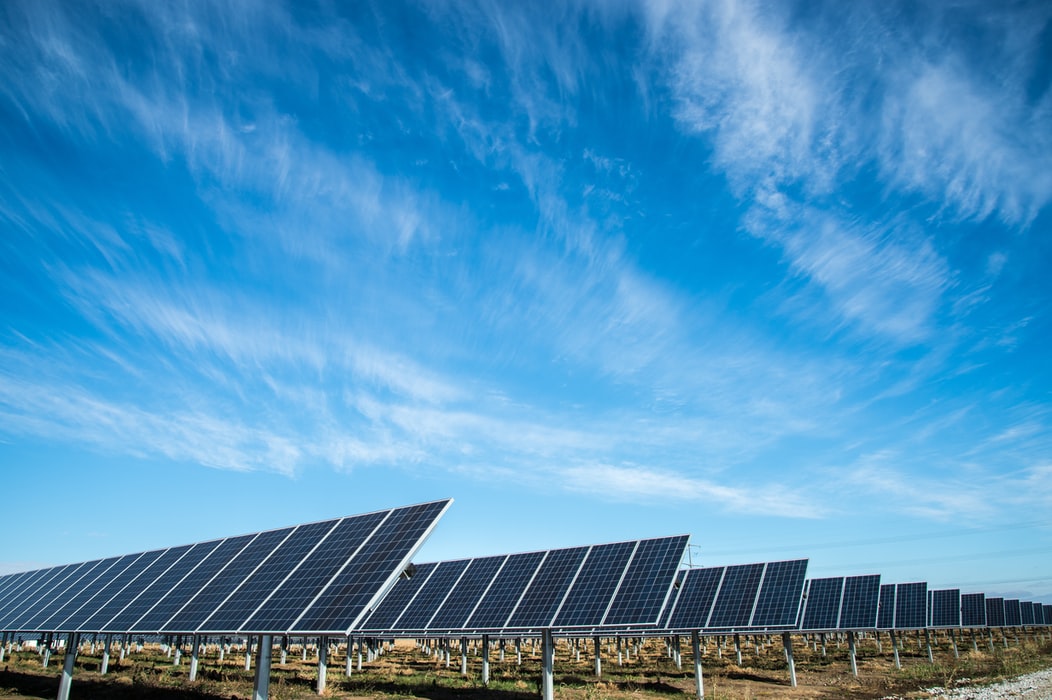
As the number of solar projects continues to grow in Louisiana, a chief concern among Louisiana taxpayers is ensuring that these projects are properly decommissioning upon their abandonment.  Solar development is largely in its infancy in Louisiana, with only a handful of projects having been constructed to date.  However, lawmakers are acting now to ensure
Last week, the Louisiana Governor’s Office hosted Louisiana Wind Week 2021 to assess Louisiana’s future in offshore wind energy development. Louisiana Wind Week followed the Bureau of Ocean Energy Management (BOEM)’s first Gulf of Mexico Intergovernmental Renewable Energy Task Force meeting, which was held on June 15.
Continue Reading Louisiana’s Future in Offshore Wind: Takeaways from Louisiana Wind Week

Perhaps the most important right granted in a solar development agreement is the right of the solar developer to use the surface of the property to evaluate, construct, and operate the solar farm.  But how can the solar developer ensure that its right to use the surface of the property is not encumbered by or inferior to the rights of others?  Or, more specifically, how can the solar developer ensure that a mineral estate owner will not be able to locate a well in the middle of its solar farm?  This issue is at the forefront of the minds of the renewables industry and was the subject of a recent Texas Court of Appeals decision.  As renewable energy projects continue to multiply, clashes between solar developers and mineral interest owners will increase as well.
Continue Reading Solar Leasing in Louisiana: The Accommodation Doctrine

Several pieces of energy-industry legislation are teed up for debate as state legislatures reconvene for their first sessions of 2021. With topics ranging from offshore oil and gas moratoriums to restrictions on natural gas flaring and venting, the following is an overview of notable energy legislation to be heard in state legislatures this year.

The

Governor John Bel Edwards has identified offshore wind energy as a feature component of his recently announced renewable energy initiative for the Gulf of Mexico. The Governor announced the initiative at the inaugural meeting of his Climate Initiative Task Force.
Continue Reading Governor Edwards Indicates that Offshore Wind is on the Horizon in the Gulf of Mexico

With recent increased investments in wind power, the development of floating offshore wind farms presents the potential to access areas previously unavailable. On floating offshore wind farms,  a wind turbine is attached to a floating structure which is tethered to the sea floor, as opposed to the turbine being a fixed foundation in the sea. This allows the wind turbines to operate in deeper waters.[1]
Continue Reading Floating Foundations: The Future of Offshore Wind

U.S. and European major oil companies are beginning to re-evaluate their business structure and investment strategies in light of the current financial, legal, and social climate. In response, the industry is seeing a varying degree of investments in renewable energy and commitments to climate-related goals.  As companies make this transition into renewable energy, one sector picking up speed is wind energy.

BP, which rebranded itself as “Beyond Petroleum” in 2000, announced in February of this year its plans of becoming a net-zero emissions company by 2050. In August, BP set forth its strategy towards net-zero emissions, which includes plans to have 50 gigawatts of renewable generating capacity by 2030, up from the 2.5 gigawatts it currently has.Continue Reading Oil Majors’ Commitment to Net-Zero Emissions Leads to Investments in Wind Energy

The Louisiana Third Circuit Court of Appeal recently issued an opinion involving issues of prescription and breach of contract claims in the context of Act 312 and “legacy lawsuits” that oil and gas companies must remain cognizant of going forward. In State of Louisiana, et al. v. Louisiana Land & Exploration Co., et al., the Third Circuit affirmed the Vermilion Parish School Board’s authority to sue on behalf of the state, rejected a prescription defense on the basis of prescription immunity under the Louisiana Constitution, and concluded that a finding of “environmental damage” as defined under Act 312 is sufficient to trigger a breach of contract claim.
Continue Reading Third Circuit Issues New Act 312 Decision Involving Prescription and Breach of Contract

On April 23, the Supreme Court of the United States issued an opinion in County of Maui, Hawaii v. Hawaii Wildlife Fund, et al., where the Court held that, in limited circumstances, a party discharging pollutants into groundwater that ultimately end up in navigable waters will need a permit under the Clean Water Act.
Continue Reading The Supreme Court Looks for a Middle Ground to Determine When Clean Water Act Permit is Required for Discharges to Groundwater

This article was updated on April 14, 2020.

Day-to-day life has been dramatically impacted by the coronavirus disease 2019 (COVID-19), and many courts in Louisiana and Texas have been forced to close or limit operations in conjunction with stay-at-home orders.  A brief discussion of how COVID-19 has affected Louisiana and Texas courts is discussed here.Continue Reading Louisiana and Texas COVID-19 Stay-at-Home Orders and Effects on State Courts