
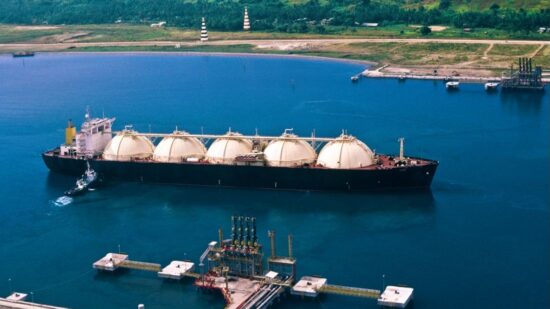



In October 2025, a district court in Cameron Parish granted a challenge brought by environmental justice groups who sought to vacate a coastal use permit (CUP) issued by the Office of Coastal Management (OCM) for the construction of an LNG facility. In granting petitioners’ challenge, the district court primarily cited OCM’s failure to analyze climate change and environmental justice impacts in issuing the permit. Two months later, the same petitioners—a collection of national and state non-profit environmental groups—are petitioning the same district court to vacate the “re-issued” CUP for substantially similar reasons but also for failing to abide by lawful permitting procedures.
The original permit authorized Commonwealth LNG, LLC to build a Liquid Natural Gas (LNG) export terminal along the Calcasieu Ship Channel. During the application process, petitioners submitted public comments, expressing concerns regarding the Parish’s wetlands from dredging, as well as the interference with use and access of the Ship Channel by fisherman and boaters.
In October 2025, the district court vacated the original coastal use permit, holding that OCM failed to comply with the Louisiana Constitution, the Coastal Resources Program, and its own regulations. Among the several deficiencies identified, the court focused on OCM’s failure to meaningfully evaluate climate impacts and cumulative effects, particularly in light of the concentration of other LNG facilities in Cameron Parish.
Rather than initiate an entirely new permitting process with renewed notice and public comment, OCM issued a “Revised Basis of Decision” to address the factors that the district court found lacking in its original analysis. The Petitioners’ December 2025 petition for judicial review once again challenges the “re-issued” permit for the Commonwealth LNG export terminal in Cameron Parish. The petition argues that once the permit was vacated, it ceased to exist; any subsequent authorization required a new administrative process and a fresh substantive analysis; and it raises the question to what extent Louisiana agencies must consider climate impacts in coastal zone decision‑making.
Permitting Procedures for re-issuing a vacated CUP
Central to the petitioners’ challenge is the procedural viability of re-issuing a virtually identical CUP after a court vacates the original permit without going through an entirely new permit application process. While petitioners acknowledge that OCM does not have rules addressing the process for re-issuing a CUP, they interpret this silence as a need to start anew from the beginning of the permitting process.
The Public Trust Doctrine and Substantive Obligations
Alternatively, Petitioners argue that OCM did not remedy the deficiencies identified by the court in its October 2025 decision, which included a violation of Louisiana’s constitutional public trust doctrine. Citing to Louisiana’s Constitution and a handful of court decisions, Petitioners contend that OCM has a mandate—as a “public trustee” of the state’s natural resources—to consider or mitigate environmental impacts. The petition contends that OCM’s revised decision fails to do so and that while the agency purported to conduct an “independent analysis” of the factors the district court said it must consider, its analysis was actually derived from an environmental review conducted by Federal Energy Regulatory Commission (FERC). According to petitioners, that analysis has already been criticized by a federal appellate court for insufficiently addressing air pollution and health impacts associated with LNG exports. By adopting those conclusions wholesale and labeling them and “independent analysis” the petition argues that OCM failed to conduct the state‑specific evaluation required under Louisiana law.
Broader Implications
This case reflects a continuing trend in which concerns over climate change are the basis for challenging the issuance of permits.
Ultimately, the petition presents a question increasingly central to climate litigation: what is the proper balance between the continued use of fossil fuel infrastructure and climate impacts. Louisiana’s resolution of this issue may carry significant weight for future permitting decisions.
For more information, contact Liskow attorneys Kelly Becker, Jamie Rhymes, and Andrew Hughes, and visit Liskow’s Environmental – Regulatory & Litigation practice page.